


 Download Free Sample
 Buy Now
Global B-Cell Inhibitors Market Size
The global B-cell Inhibitors market, valued at USD 21.2 billion in 2025, is projected to reach USD 24.6 billion in 2026 and USD 51.5 billion by 2035, with a 8.6% CAGR during the forecast period 2026 to 2035.

See What’s in the Full Report – Request Your Complimentary Insights!
B-cell Inhibitors play a crucial role in modulating immune responses and are involved in the treatment of autoimmune disorders and B-cell malignancies. Notably, B cell inhibitors work by targeting and depleting B cells through different mechanisms. For instance, monoclonal antibodies targeting B-cell surface markers such as CD20 and CD19 block survival signals, while small molecule inhibitors like Bruton’s tyrosine kinase inhibit B-cell receptor signaling pathways, thereby preventing B-cell activation, proliferation, and survival. These therapies have shown broad applicability in managing conditions like lymphomas, chronic lymphocytic leukemia, multiple sclerosis, and lupus. Within antigen-directed approaches, CD19 therapeutics target a B-cell surface marker through antibody-based and cellular strategies.
Presently, over 400 B-cell Inhibitors are in different stages of clinical trials. This sector continues to attract significant investments and strategic collaborations; this is because of their potential to overcome existing production bottlenecks and improve therapeutic outcomes. Collectively, these advancements underscore the growing commitment to address unmet medical needs. B-cell Inhibitors are likely to experience strong growth, making them critical enablers of the next generation of genetic medicines and treatments targeting complex diseases.
 |
 |
 |
B-Cell Inhibitors Market Segmentation Insights
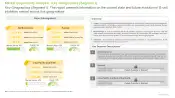
The B-cell Inhibitors market analysis also features the likely distribution of the current and forecasted opportunity across various segments, such as stage of development, indication and key geographies.
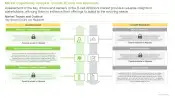
We have created three market forecast scenarios, conservative, base and optimistic, to account for future uncertainties in key parameters and enhance the robustness of our model. These scenarios represent different tracks of the industry's evolution.
 |
 |
 |
The B-cell Inhibitors market is growing by the rising prevalence of autoimmune disorders such as rheumatoid arthritis, lupus along with hematologic malignancies including non-Hodgkin’s lymphoma, chronic lymphocytic leukemia, and diffuse large B-cell lymphoma. Moreover, increasing demand for targeted immunomodulatory therapies with fewer side effects compared to traditional treatments is fueling investment and innovation in this field.
 |
 |
 |
Recent Developments in B-Cell Inhibitors Market
Several recent developments have taken place in the field of B-cell inhibitors, and we have outlined some of these below. These developments, even if they arose after our market report’s release, support the overall B-cell inhibitors market trends detailed in our analysis.
- In September 2025, Zenas BioPharma collaborated with Royalty Pharma for up to USD 300 million in funding for the development of Obexelimab for autoimmune disorders.
- In June 2025, BioNTech entered into collaboration with Bristol Myers Squibb with an aim to co-develop and co-commercialize next-generation bispecific antibody candidate BNT327.
- In February 2025, FDA announced the approval of Pfizer’s ADCETRIS® combination regimen for the treatment of relapsed / refractory diffuse large B-Cell lymphoma in adult patients.
Have Questions? Let’s Get Them Answered.
Industry Experts on B-Cell Inhibitors
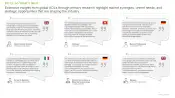
We have incorporated insights from multiple stakeholders in this domain, supported by detailed transcripts of third-party interviews conducted with the following individuals
- Doctor of Medicine, mid-sized organization, UK
- Professor, mid-sized organization, Switzerland
- Director the Division of Molecular Immunology, large organization, Germany
- Medical Professional, large organization, Italy
B-cell inhibitors domain will mark a turning point in 2026. Industry expert’s states, “Over the past few years, approval of B-cell Inhibitors have revolutionized the treatment of multiple disorders.”
Owing to the growing research and development efforts for B-cell Inhibitors, the success of early-stage clinical trials and the promising therapeutic potential of B-cell Inhibitors, we believe that the global market for B-cell Inhibitors is likely to grow at a steady rate during the forecast period. Prominent examples of players engaged in B-cell Inhibitors development include (in alphabetical order) Gentech, Novartis, Roche and Sanofi.
B-cell Inhibitors Market Share Insights
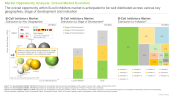
Market Share by Stage of Development: Marketed Sub-Segment Holds the Largest Market Share
- This segment highlights the distribution of market across various stages of development, such as phase II, phase III and marketed. As per B-cell Inhibitors market size forecast, in current year, the marketed sub-segment occupies the highest market share (over 80%), driven by the strong presence of B-cell Inhibitors, such as rituximab and ibrutinib. These inhibitors address multiple indications, thereby expanding market reach.
- The market for B-cell Inhibitors in phase III is likely to witness a significant growth rate (CAGR) of 43% during the forecast period. This is because of the rising prevalence of autoimmune disorders across different countries.
Your Business is Unique – Why Shouldn’t Your Report Be?
Market Share by Indication: Multiple Sclerosis Sub-Segment Holds the Largest Market Share
- This segment highlights the distribution of the global market across various indications, such as ANCA, graves' disease, hidradenitis suppurativa, immune thrombocytopenia, immunoglobulin nephropathy, membranous nephropathy, multiple sclerosis, myasthenia gravis, neuromyelitis optica, rheumatoid arthritis, sickle cell anemia, systemic lupus erythematosus, warm autoimmune hemolytic anemia. In the current year, the multiple sclerosis sub-segment holds the largest market share. This is due to the fact that multiple inhibitors have approval for this indication across different regions. Some of these approved drugs include alemtuzumab, baricitinib, belimumab and ocrelizumab.
- Further, as per B-cell Inhibitors market forecast, the market is likely to witness a substantial increase in the share of immunoglobulin nephropathy sub-segment, growing at a CAGR of 34% during the forecast period. This is because several B-cell Inhibitors are currently in the later stages of development and are likely to receive approval in the coming year.
Market Share by Key Geographies: North America to Hold the Largest Market Share
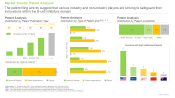
- According to the B-cell Inhibitors market share analysis, North America is likely to capture the majority (~75%) of the B-cell Inhibitors market share. This is due to the fact that North America houses advanced healthcare infrastructure that enables the developers to conduct large-scale clinical trials so as to gather sufficient data to meet the regulatory approval requirements.
- It is worth highlighting that the market in China is likely to have higher B-cell Inhibitors market growth rate (15%). This is due to the rapidly growing patient population, the rising incidence of various indications in this country.
Want Information on Specific Region / Segment?
B-Cell Inhibitors Market Key Takeaways
The “B-cell Inhibitors Market: Industry Trends and Global Forecasts, till 2035” market report features an extensive study of market landscape, clinical trial analysis, patent analysis, partnership and collaboration, porter’s five forces and market forecast and opportunity analysis, during the forecast period.
Global B-cell Inhibitors Market Outlook
The market report highlights the efforts of B-cell Inhibitors companies in the healthcare market. Key takeaways of the market report have been briefly discussed below.
B-cell Inhibitors Market Landscape
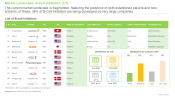
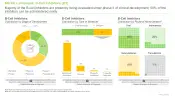
The presence of 400 developers leads to market landscape concentration. Of these, close to 30% of the developers were established post-2010, indicating the growing interest of stakeholders in this domain. Notable examples of companies (post-2010, in alphabetical order) include Arcutis Biotherapeutics, Lynk Pharmaceuticals, Vera Therapeutics, Priovant Therapeutics, Candid Therapeutics, Sinovent, and I-MAB Biopharma.
A Look at Some of the Marketed B-Cell Inhibitors
| Drug | Target Indications | Revenues (2025) |
| Baricitinib | Rheumatoid Arthritis | USD 823 Million |
| Belimumab | Systemic Lupus Erythematosus | USD 2,145 Million |
| Ocrelizumab | Multiple Sclerosis | USD 7,406 Million |
| Inebilizumab |
|
USD 559 Million |
| Ublituximab | Multiple Sclerosis | USD 741 Million |
Note: The drugs presented in the table are just representative of the multiple marketed B-cell Inhibitors available, which have been covered in the full report
Which are the Most Promising B-cell Inhibitors in the Pipeline?
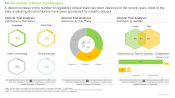
The B-cell Inhibitors therapy pipeline analysis shows that 51% of the B-cell Inhibitors are currently in phase II of development, with 20% of therapies in phase III, underscoring robust research activity and strong potential for new entrants in the coming years.
What future market opportunities exist for stakeholders in the B-Cell Inhibitors industry? - Global Market to Grow at 9.30% CAGR
The global B-cell Inhibitors market size is likely to be worth $24.6 billion in 2026 and will reach $51.5 billion by 2035. Further, in terms of scale of operation, the global market highlights the distribution across preclinical, clinical and commercial scales. Currently, the clinical sub-segment is likely to dominate the overall market by accounting for almost 50% of the market share, owing to the robust pipeline in various stages of clinical trials. Further, the commercial segment is likely to grow at a relatively higher CAGR of 13% during the forecast period.
Regional Analysis: Which Region Holds the Largest Share of the B-Cell Inhibitors Market?
North America is Leading the Market
North American companies will likely dominate the market by 2035, owing to the robust research and development activities. Further patients are increasingly adopting B-cell Inhibitors for the treatment of various non-oncological disorders.
China: An Emerging Growth Spot
The market in China is likely to grow at a relatively high CAGR (15%), during the forecast period till 2035. This is a result of increased healthcare spending and supportive government initiatives like the Healthy China 2030 plan, and a rising prevalence of diseases due to an aging population, in this region.
Which key factors are driving the growth of the B-Cell Inhibitors market in pharma and healthcare?
The market is driven by the rising prevalence of autoimmune diseases and other indications, coupled with the ongoing advancements in targeted therapies that offer improved efficacy and safety. Expanding indications into areas like multiple sclerosis along with increasing healthcare investments and supportive regulatory environments, further propel the market growth. Further, next-generation inhibitors and biosimilars are emerging, enhancing accessibility and broadening treatment applications, which positions the market for sustained expansion in the coming years.
What are the primary challenges and limitations in developing B-Cell Inhibitor therapies?
Despite their several benefits, the market faces several challenges. The significant issues include high treatment costs, intense competition leading to pricing pressures, and complex disease mechanisms that complicate the overall process of drug development. Moreover, the regulatory hurdles and safety concerns, including long-term side effects, impacts the overall market growth.
Unlock Deeper Insights – Schedule Your Personalized Workshop Today!
B-cell Inhibitors Market Trends 2026
How is the competitive landscape evolving through partnerships, mergers, and acquisitions?
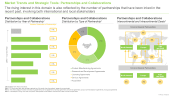
Stakeholders in this domain have established numerous partnerships and collaborations, allowing them to expand their respective offerings and enhance their capabilities and visibility. For instance, in June 2025 Ono Pharmaceuticals entered into collaboration with Vertex in order to develop and commercialize B-cell Inhibitors named Povetacicept in Japan and South Korea.
Moreover, the landscape is expected to witness heightened collaboration between industry and non-industry stakeholders, with a collective emphasis on advancing the inhibitors that ensure both safety and efficacy.
B-cell Inhibitors Market Report Coverage
The market report presents an in-depth analysis, highlighting the capabilities of various stakeholders in the B-cell Inhibitors industry, across different Key Geographies. Amongst other elements, the market report includes:
- An Infographic Executive Summary
- Market Landscape
- Clinical Trial Analysis
- Patent Analysis
- Partnerships and Collaborations
- Porter’s Five Forces
- Market Forecast and Opportunity Analysis
B-Cell Inhibitors Market: Report Attributes
| Key Report Attributes | Details | |
| Historical Trend | Since 2023 | |
| Forecast Period | Till 2035 | |
| Market Size 2026 | $ 24.6 Billion | |
| Market Size 2035 | $ 51.5 billion | |
| CAGR (Till 2035) | 8.6% | |
| Stage of Development |
|
|
| Indication |
|
|
| Key Geographies |
|
|
| Excel Data Packs (Complimentary) |
|
|
| Key Players Profiled |
(A complete list of more than 400 companies is available in the report) |
|
| PowerPoint Presentation (Complimentary) | Available | |
| Customization Scope | 15% Free Customization | |


