
Lowest Price Guaranteed
Slides
187
Last Updated
July 2026
View Count
5744
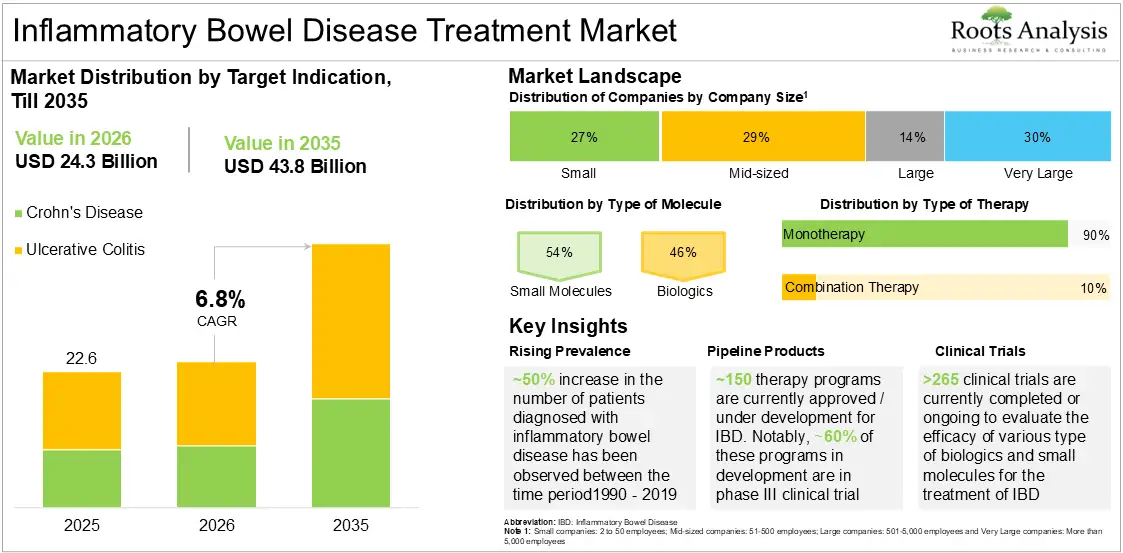
The global inflammatory bowel disease treatment market size, valued at USD 22.6 billion in 2025, is projected to reach USD 24.3 billion in 2026 and USD 43.8 billion by 2035, representing a CAGR of 6.8% during the forecast period 2026 to 2035.
To learn more about this report, request a free sample copy
The IBD treatment market is projected to expand rapidly, driven by rising disease prevalence and lack of selective treatment approaches.
Dr. Tauseef Ali (Gastroenterologist, Anthony Hospital), stated that, "The best time for any medication to work and be most efficacious is early in the disease process. For example, some medications, such as anti-TNF therapies (a category including Humira, Cimzia, Simponi, and Remicade), work best if started within the first two years of diagnosis."
Discussions with multiple stakeholders in this domain influenced the opinions and insights presented in this study. The inflammatory bowel disease treatment market report includes transcripts of the following third-party discussions:
Inflammatory bowel disease (IBD) is a group of chronic, immune mediated disorders primarily affecting the gastrointestinal tract. Crohn's disease and ulcerative colitis are the two principal forms of inflammatory bowel disease, and these disorders manifest as relapsing and remitting inflammation, causing symptoms, such as abdominal pain, diarrhea, rectal bleeding, weight loss, and profound fatigue.
Close to 30 drugs are currently approved for the treatment of inflammatory bowel disease. However, these drugs often fail to achieve sustained remission in a significant subset of patients and frequently lose effectiveness over time. Many drugs are associated with notable safety concerns, such as increased risks of infection and malignancy, which constrain their long-term use and diminish patient acceptance. Moreover, the heterogeneity of disease phenotypes and the variability of treatment responses underscore the need for more targeted, individualized therapeutic approaches.
To address these unmet needs, pharmaceutical and biotechnology developers are focusing on the development of novel and targeted therapies. These companies are investing in precision–medicine strategies, including biomarker–driven trials and stratified patient selection to match mechanisms of action with discrete disease endotypes. The developers are also prioritizing improved delivery systems (including oral and topical) to maximize local therapeutic effect while mitigating systemic exposure and attendant safety risks. Collectively, these developments suggest that inflammatory bowel disease drugs are poised for strong growth, which makes them critical enablers of the next generation of therapeutic medicines.
Based on research, we have segmented the Inflammatory Bowel Disease Treatment Market into drug class, route of administration, target indication, distribution channel and geographical regions.
By Drug Class
By Route of Administration
By Target Indication
By Distribution Channel
By Geographical Regions
In 2026, the biologics market segment accounts for the highest market share (above 65%), owing to the various advantages offered by these drugs, including enhanced efficacy, steroid sparing benefits and positive patient outcomes for managing various clinical manifestations. Biologics are also expected to experience a faster CAGR of 7.2% during the forecast period. This overall dominance of biologics drug class is also due to robust late-stage clinical pipeline along with a broader clinical shift towards personalized medicine. Further, the growing trend towards personalized medicine is driving significant investment in human microbiome directed therapies for inflammatory bowel disease, as researchers recognize that gut dysbiosis plays a key role in IBD pathogenesis.
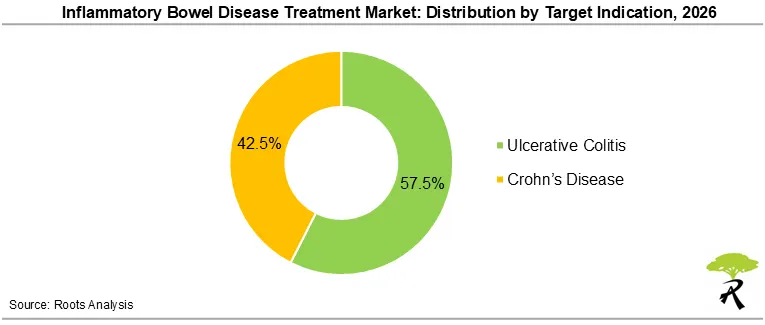
Ulcerative colitis is likely to capture the largest share (close to 60%) of the inflammatory bowel disease treatment market, growing at a significant rate during the forecast period. Rising global incidence rates, increased early detection, and expanding healthcare infrastructure will primarily drive this expansion. A strong pipeline of advanced therapeutic drugs, including new biologics and small molecule oral medications, will further drive the market growth.
The subcutaneous route occupies the largest market share, as most of the currently approved drugs and approvals anticipated in near term can be administered through subcutaneous route. The therapies administered through oral route are likely to grow at a relatively higher CAGR (8.4%) during the forecast period. This is due to their non-invasive nature, convenience achieved during drug administration and increased patient compliance as compared to other routes.
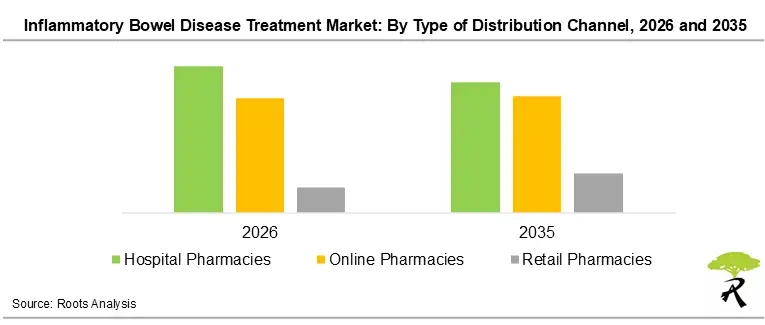
The hospital pharmacies are expected to dominate the industry through 2035, in terms of distribution channel leveraged for the sale of IBD treatment drugs. This is due to their ability to provide seamless access to high-cost specialty drugs through structured procurement contracts and optimized insurance reimbursement models. The online pharmacies are anticipated to witness a relatively higher CAGR of 12.1%. Notably, online pharmacies utilize artificial intelligence and machine learning for inventory management, personalized healthcare recommendations and automated refill reminders.
Examples of key companies profiled in this market report include AbbVie, Athos Therapeutics, Eli Lilly and Company, Janssen Biotech, Pfizer, Roche, Sanofi, Spyre Therapeutics, Takeda. The complete list of close to 65 companies is available in the full report, which also includes an easily searchable Excel database of companies worldwide. Additional named organizations referenced elsewhere in this report's underlying data, including AstraZeneca, Gilead Sciences, Merck, UCB and Zydus reflect initiatives undertaken across the inflammatory bowel disease ecosystem, not an endorsement relationship with Roots Analysis.
North America currently captures majority (~70%) of the inflammatory bowel disease treatment market share. Numerous factors contribute to the region's dominance, including rising number of patients (with prevalence between 2.4 and 3.1 million), technological advancements and the presence of established players in this region. The advanced healthcare infrastructure and research capabilities in North America enable pharmaceutical and biotech companies to conduct extensive clinical trials, which are necessary to meet the required regulatory guidelines provided by the regulatory bodies.
Our proprietary inflammatory bowel disease treatment market forecast estimates suggest that the Asia-Pacific region will grow at a relatively faster pace (8.4%) through 2035. The key factors contributing to the region's growth include the expansion of pharmaceutical manufacturing, technological advancements, rising demand for targeted biologics, supportive government initiatives and availability of skilled professionals at lower costs within this region.
Alongside the core market report, clients receive complimentary Excel data packs covering the inflammatory bowel disease market landscape, clinical commercial attractiveness, clinical trials analysis, drug failure analysis, and market sizing and opportunity analysis. A complimentary PowerPoint presentation summarizing the full report is also included, and 15% free customization scope is available on request.
Roots Analysis is an independent market research and consulting firm. This report draws on publicly available information, primary interviews, and proprietary analysis. Roots Analysis is not affiliated with, endorsed by, or a representative of the USFDA, the European Medicines Agency, or any of the pharmaceutical companies, branded therapeutics, or individuals named in this report. All company and product names are used for identification purposes only and remain the property of their respective owners.
Roots Analysis maintains its own proprietary primary research process, and does not receive compensation from any company profiled within the report, in exchange for inclusion or favorable characterization.
Clients evaluating this report alongside competing market studies should weigh two factors in particular: whether the segmentation depth matches their specific decision, and whether the publisher discloses its own independence from the companies and regulatory bodies it covers.